
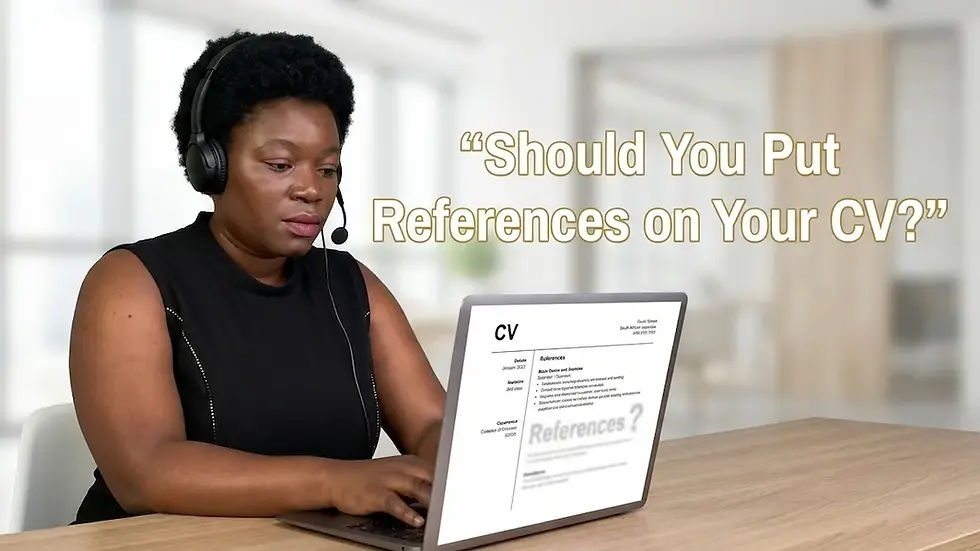
Should You Include References on Your CV in 2026 or Wait for the Right Moment?

Updated: Sep 22
When preparing your CV, one question often arises: should you list references right away, or wait until later in the hiring process? Many job seekers believe that including references on their CV gives them an edge. The idea sounds logical: if recruiters see references, they might trust you more. If you don’t include them, they might choose someone else who did. But in 2026, this belief no longer holds true in the way most people think.
The key factor is timing. Knowing when to share references can make a bigger difference than simply having them on your CV. This article explains how hiring works today, why references matter at specific stages, and how companies collect them in modern recruitment.
How Hiring Decisions Are Made Today
Recruiters receive hundreds or even thousands of applications for a single role. They need to quickly identify candidates who fit the job requirements. At the initial application stage, references are rarely part of the decision.
Recruiters focus on:
Skills relevant to the job
Experience and previous job titles
Alignment with the role’s tools and systems
Industry relevance
Keywords that match the applicant tracking system (ATS)
If a candidate does not meet these criteria, having references on the CV will not help. Conversely, if a candidate is qualified, references are not necessary to move forward.
This means the common worry, “Why would recruiters reach out to someone without references?” is misplaced. Recruiters contact candidates because their profile fits the role, not because of references.
When References Become Important
References play a critical role, but later in the hiring process. They are most useful:
After the candidate has been shortlisted
Following interviews
When the candidate is a serious contender for the job
Before making a formal job offer
At this stage, references are relevant, targeted, and purposeful. They provide context and verification about the candidate’s past performance and character. This is when companies want to confirm what they have learned during interviews.
For example, a hiring manager might ask for references to verify leadership skills or teamwork abilities mentioned in the interview. This helps reduce hiring risks and ensures the candidate is a good fit.
How Companies Collect References in 2026
The traditional way of listing references on a CV is becoming outdated. Many companies no longer expect or rely on candidates to provide reference details upfront. Instead, they use modern tools to gather this information securely and efficiently.
Common methods include:
Secure reference-capture forms: Candidates receive a link to submit references separately after progressing in the hiring process.
Background-check platforms: These services collect and verify references as part of a broader background screening.
HR systems: Integrated recruitment software often manages reference requests and responses digitally.
This approach protects candidate privacy and streamlines the hiring workflow. It also ensures references are collected only when needed, avoiding unnecessary delays.
Why You Should Wait to Share References
Including references too early can have drawbacks:
It takes up valuable space on your CV that could highlight your skills and achievements.
Recruiters may not read references at the initial stage, so it adds little value.
Sharing references prematurely can expose your contacts to unnecessary outreach.
Instead, focus on crafting a strong CV that clearly shows your qualifications and experience. Prepare your references separately and share them only when requested.
Tips for Managing Your References Effectively
To be ready when the right moment comes, keep these tips in mind:
Choose references carefully: Select people who know your work well and can speak positively about your skills.
Ask permission: Always get consent before listing someone as a reference.
Provide context: Brief your references about the job you are applying for so they can tailor their feedback.
Keep contact details updated: Make sure you have the correct phone numbers and emails.
Prepare a reference list: Have a separate document ready with names, titles, and contact information to share quickly when asked.
What This Means for Job Seekers in South Africa
In South Africa, traditional HR practices often overlap with modern recruitment systems. Some employers still expect references on CVs, while others follow the newer approach of requesting them later.
Understanding this shift can help you navigate the job market more effectively:
If applying to a company with a traditional approach, you might include a brief note like “References available upon request” rather than full details.
For companies using modern systems, focus on your qualifications and wait for the reference request.
Always be ready to provide references quickly when asked, as delays can slow down your hiring process.
The Importance of Timing in Reference Sharing
Timing is crucial when it comes to sharing references. It can significantly impact your chances of landing a job. Recruiters are looking for candidates who not only have the right skills but also the right support from their references.
When you wait to share references, you allow your application to shine on its own. This way, when the time comes to provide references, they can reinforce the positive impression you've already made.
Final Thoughts
References are valuable, but their power depends on when you share them. In 2026, recruiters focus on your skills and experience first. They ask for references only when they seriously consider you for the role.
Instead of listing references on your CV, prepare a strong application that highlights your fit for the job. Keep your references informed and ready to support you when the time comes.
This approach saves space on your CV, respects your contacts’ privacy, and aligns with how modern hiring works. When you wait for the right moment, your references can have a stronger impact on your job search success.
By understanding these dynamics, you can enhance your job search strategy and increase your chances of success. Remember, the right timing can make all the difference.


Comments